
Explore Byron’s latest thoughts, stories, insights, and updates on his work, ideas, and conversations shaping what comes next.

JBB's News & Articles
featured articles


connect
Turning Community Assets Into Leverage
Woodlawn Has the Pieces. What’s Next is Making Them Move as One.
This Is What Institutional Alignment Actually Looks Like and Why Nobody Is Doing It
search
What Is Community Development? And Why We Keep Getting It Wrong
“If you don’t understand the system, you will always feel like the system is against you.”
Let me start with something most people in this space will not say directly.
Community development is not buildings. It is not a groundbreaking ceremony or a new development on a vacant lot. Those are outcomes of development. Not the work itself
Development is the coordination of policy, capital, land, people, and time. When those forces align, communities grow. When they do not, projects stall and neighborhoods remain trapped in cycles of stagnation.
Most communities confuse projects with plans and activity with progress. A new building goes up and people call it development. A community meeting draws a crowd and people call it momentum. Neither one is development unless it is connected to a sequenced, strategic, governed plan with ownership outcomes on the other end.
“If you don’t understand the system, you will always feel like the system is against you.”
What Community Development Actually Is
“Community development is the intentional design of social and economic ecosystems that sustain a population over time.”
Intentional means sequenced, planned, and governed. Development is not reactive. It begins with vision aligned to land, capital, policy, and people in the right order. It is not reactive. It does not start with a building. It starts with a vision that is connected to land, capital, policy, and people in a specific order.
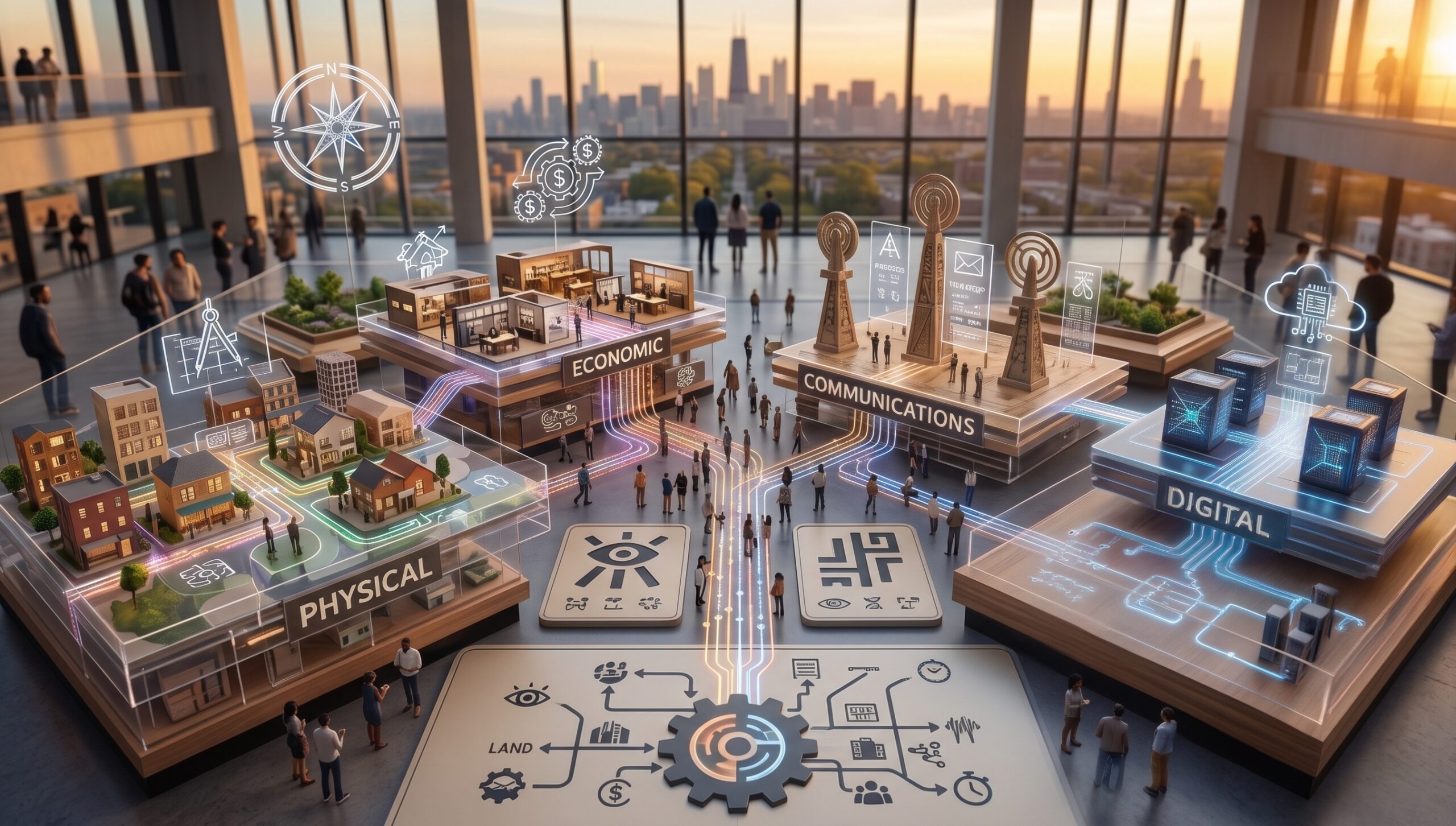
And it is never one lane. Real development requires four infrastructures operating together:
- Physical: which is real estate, housing, and retail.
- Economic: which is jobs, business ownership, and capital flow.
- Communications: which is awareness, alignment, and transparency.
- Digital: which is access, data, and future-readiness.
Most communities focus only on the physical layer because it is visible. But buildings without economic, communications, and digital infrastructure rarely produce lasting transformation.
Want to read the full article?
This post is exclusive to J.Byron’s Reflection community. Drop your email above to subscribe instantly, or use the link below to jump straight to the content.
